
Fitmate
Fitmate replaces fragmented admin tools with an AI-assisted operating system for independent trainers. By proactively prompting plan updates, suggesting programming based on client data, supporting marketing cadence, and flagging payment risks before they escalate, the system transforms reactive administrative work into structured, intelligent workflows. Trainers can focus on client relationships and scale their business with confidence.
ROLE
UX/UI Designer + UXR
TEAM
6 UX Designers
TIMELINE
9 weeks
TOOLS
Figma, Google Suite, Miro
CLIENT
N/A (UX Design Masters)
YEAR
2021
DELIVERABLES
Stakeholder interviews
Competitive Analysis
User Testing (x3)
Design Sprint
Mockups
Prototypes
Business Strategy
Marketing Strategy
Customer Journey
Brand Book
The Core Product Bet
We made a deliberate decision to design for the trainer, not the athlete.
While an AI-powered training builder for athletes would have broadened market reach, it would not have addressed the operational constraints limiting trainers’ growth. Instead, we treated AI as an operational layer embedded across workflows. The goal was not to add another tool, but to unify existing ones into a system that could anticipate work, protect revenue, and preserve trainer autonomy.
This approach carried risk. Trust in AI was still emerging, especially when handling private client and financial data. To mitigate this, we designed intelligence as augmentation rather than automation, ensuring trainers retained full control over their decisions.

The Problem Landscape
Why Existing Tools Failed
Trainers were running their businesses across multiple disconnected platforms. Scheduling, billing, programming, and marketing each lived in separate systems, each with its own learning curve and manual oversight.
As client volume increased, three structural constraints emerged:
Context switching: Moving between tools dozens of times a day increased cognitive load and reduced time spent on clients.
Reactive administration: Tasks surfaced only when something broke or was forgotten, creating constant catch-up work.
Revenue vulnerability: Missed payments or lapsed plans were often discovered too late, directly affecting financial stability.
The bottleneck was operational, not motivational. Growth was limited by overhead, not demand.
Key Design Decisions
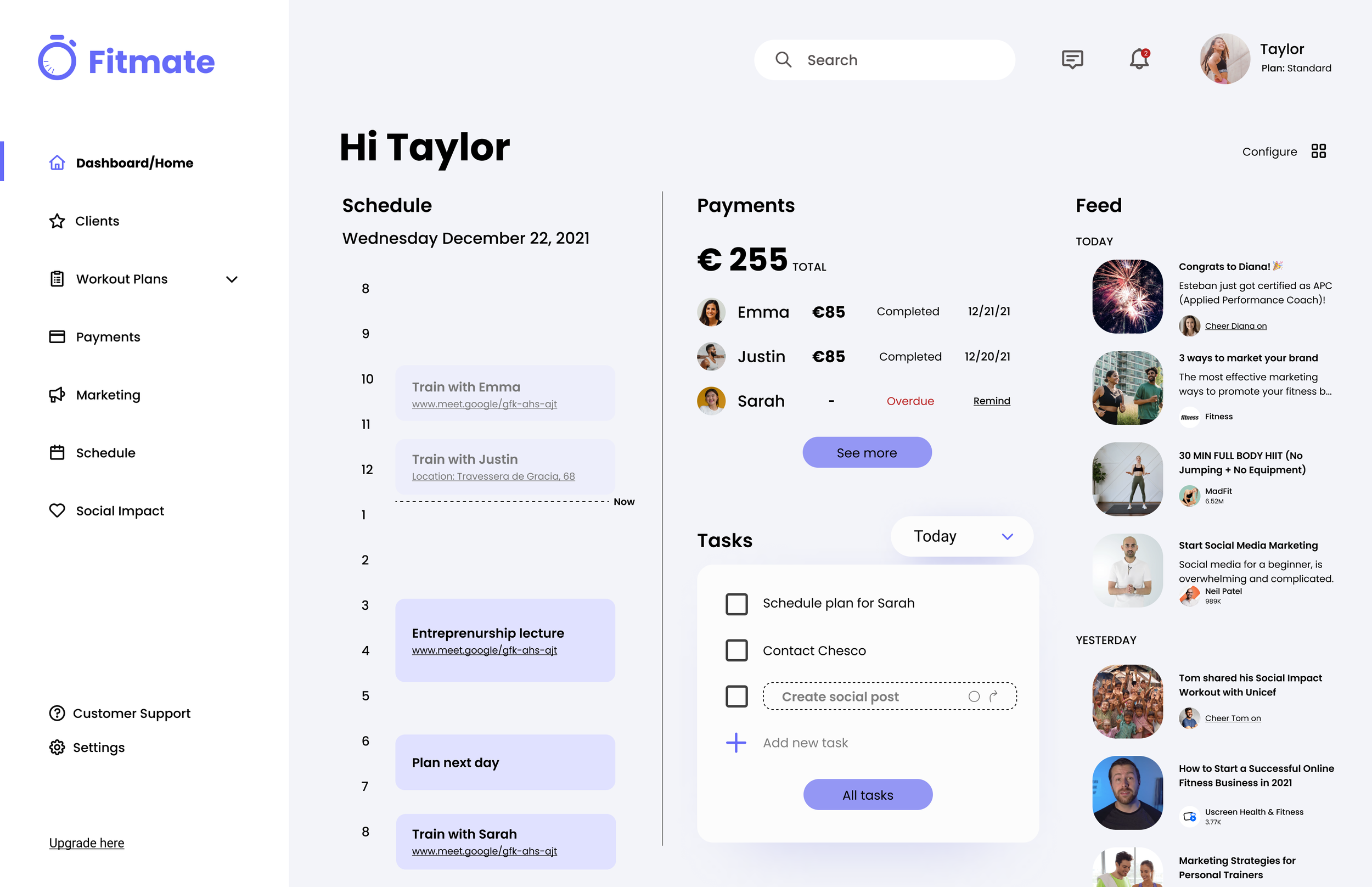
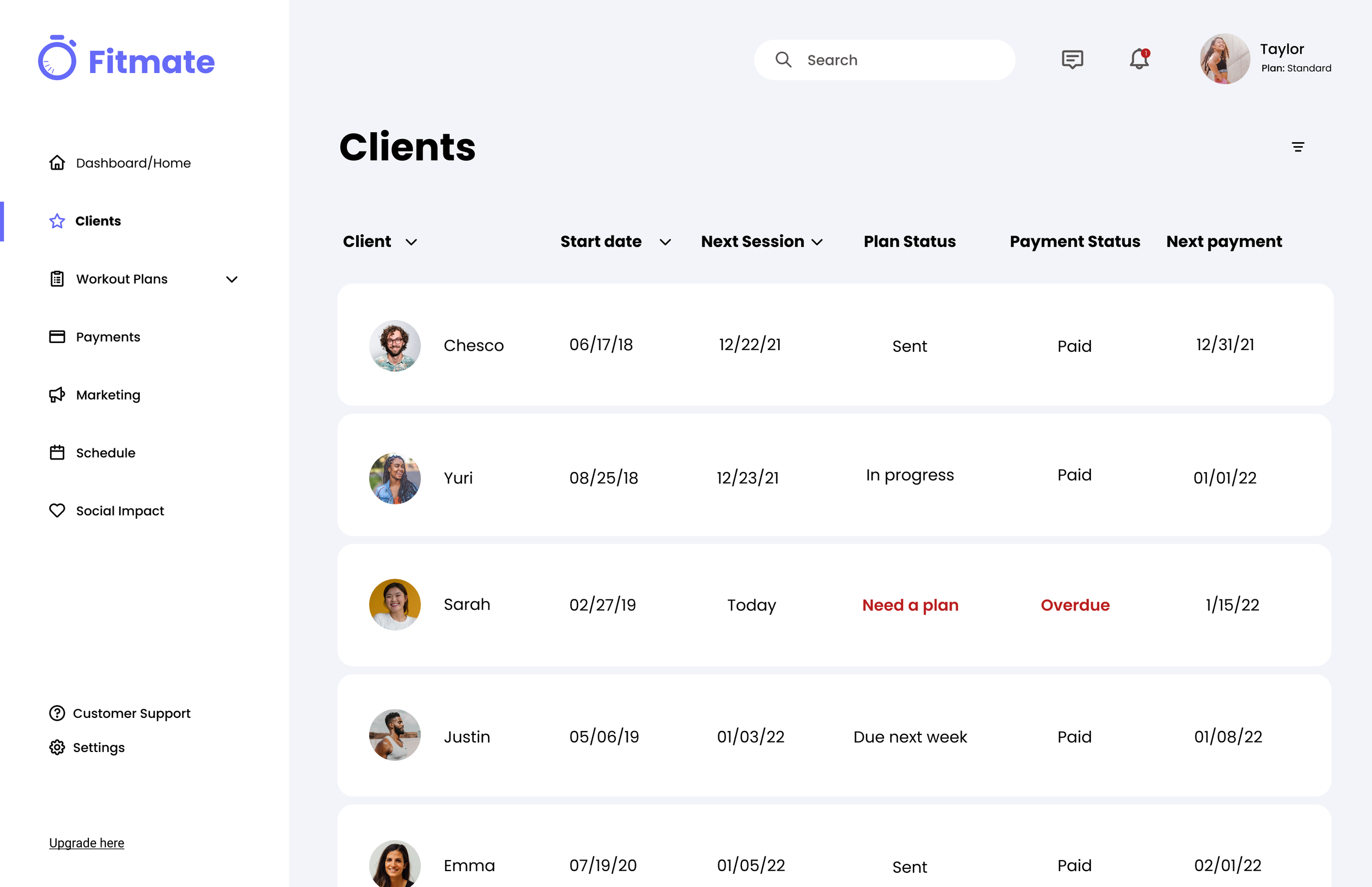
Consolidated Command Center
WHY IT MATTERED
Trainers were managing client programming, scheduling, payments, and marketing across separate systems. This forced constant context switching and manual reconciliation. Without a centralized view, it was difficult to understand the health of the business at a glance.
TRADEOFF
Consolidating multiple workflows into a single dashboard risked creating visual overload. If everything surfaced at once, the command center could become another source of cognitive strain.
DESIGN OUTCOME
We designed a hierarchical dashboard that prioritized urgency and visibility. Critical signals such as expiring plans or payment issues surfaced first, while secondary tasks remained accessible but unobtrusive. This reduced context switching and allowed trainers to operate from a single source of truth.
AI as a Proactive Prompt Layer
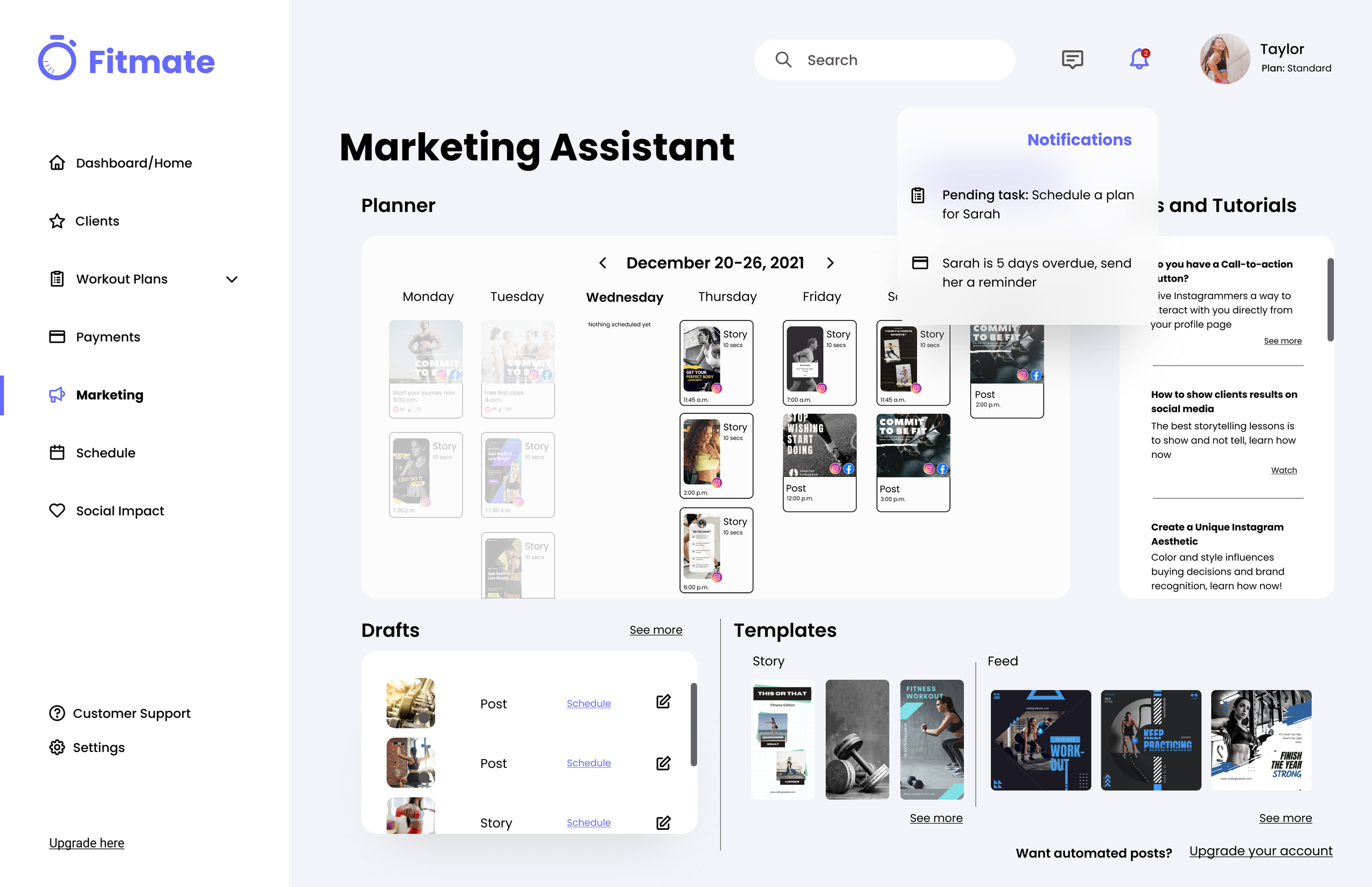
WHY IT MATTERED
Administrative tasks surfaced inconsistently and required constant manual oversight. Trainers needed a system that could signal when attention was required, without demanding continuous monitoring.
TRADEOFF
Embedding intelligence across workflows risked notification fatigue or reduced trust if suggestions felt prescriptive.
DESIGN OUTCOME
We implemented AI as a contextual prompt layer within the command center. Signals surfaced based on operational patterns such as expiring plans, incomplete workouts, missed payments, and marketing cadence gaps. Prompts were transparent and editable to preserve trainer autonomy. The system was designed to anticipate work, not replace judgment.
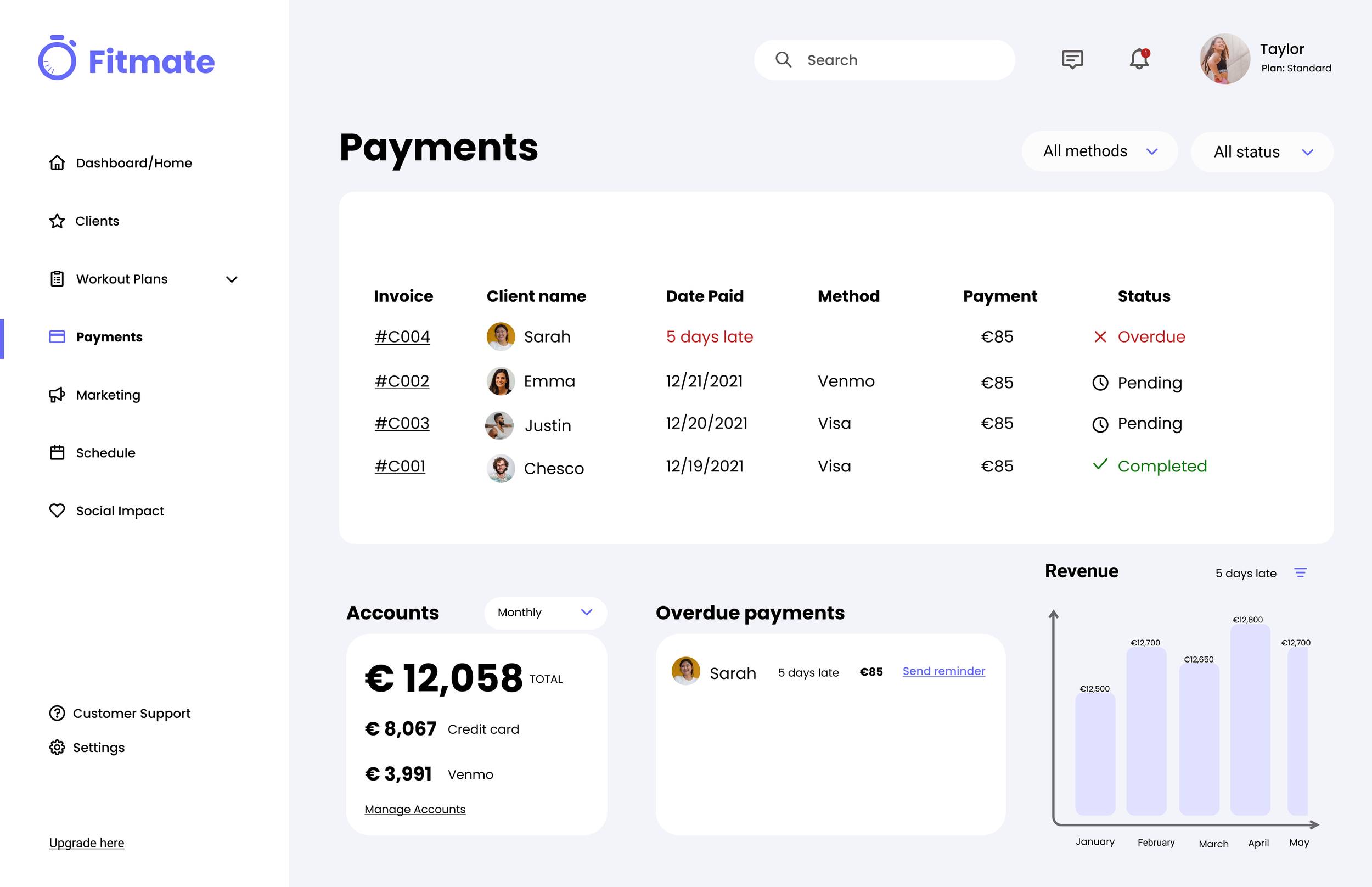
Revenue Health Visibilty
WHY IT MATTERED
Independent trainers operate as small businesses, yet often lack clear visibility into financial health. Income tracking lived in separate payment platforms, and business expenses were rarely connected to operational planning. Without a snapshot view, financial awareness required manual tracking and constant cross-checking.
TRADEOFF
Introducing revenue analytics risked shifting the product toward accounting software, increasing complexity and cognitive load.
DESIGN OUTCOME
We designed a revenue overview within the command center that surfaced incoming payments, overdue balances, and projected earnings at a glance. Rather than building full accounting functionality, we focused on visibility and early signals. This preserved clarity while reinforcing financial awareness as part of the trainer’s daily workflow.
From Features to Integrated System
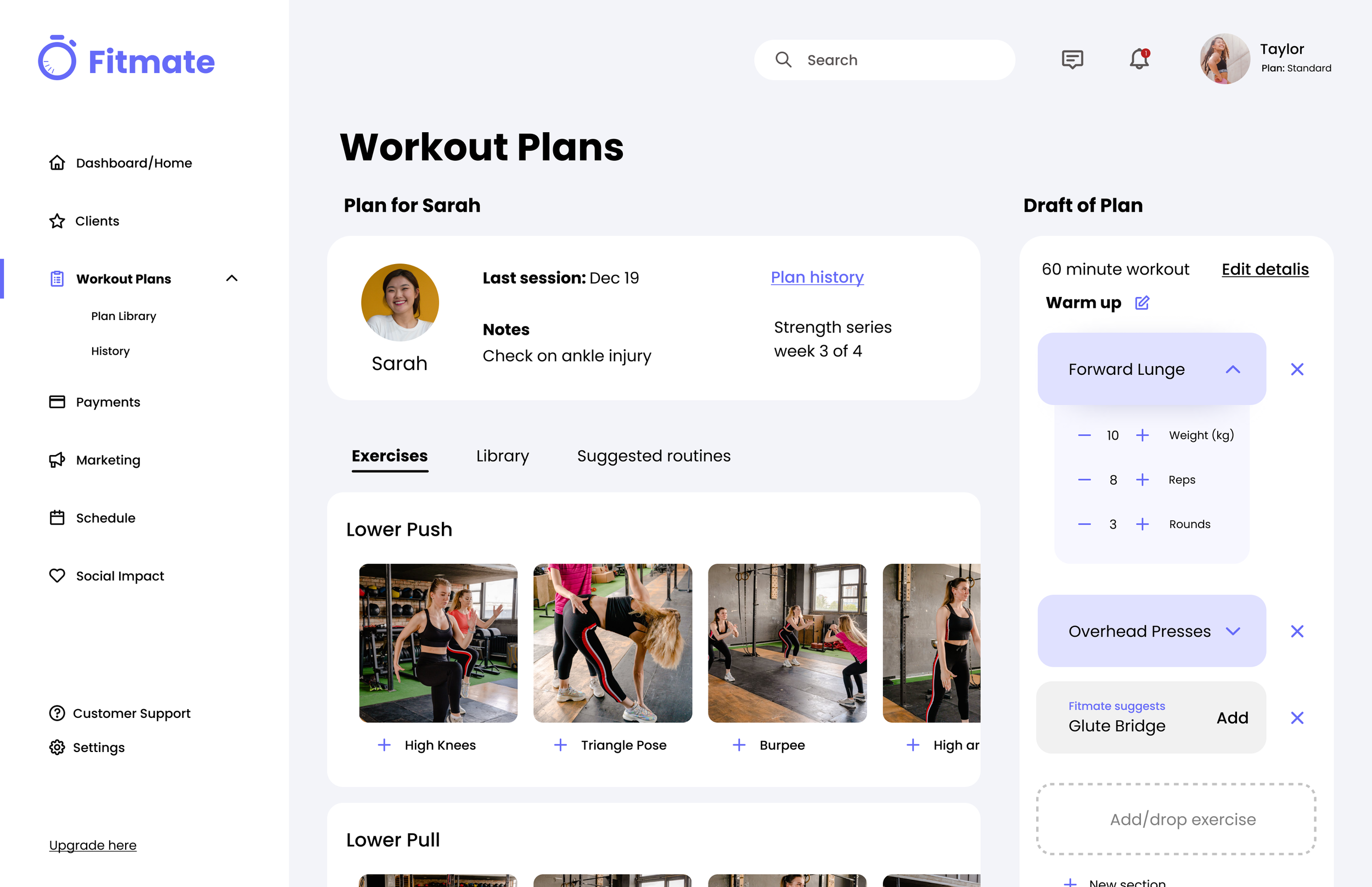
The command center, AI prompt layer, and revenue overview were designed to function as a cohesive system rather than independent features. Signals surfaced in context, financial health informed workflow priorities, and programming decisions connected directly to client retention. The product was not a collection of tools, but a structured operating model for the trainer’s business.
Reflections
The most important design choice was positioning AI as a supportive layer rather than a replacement for trainer expertise. Suggestions were framed as prompts and recommendations, not directives. This approach preserved professional autonomy while reducing cognitive load, ensuring the system enhanced judgment rather than undermining it.
AI as Augmentation, Not Automation
Designing for Adaptability
One of the most important lessons from Fitmate was recognizing when to reframe the problem. Early concepts focused narrowly on isolated features, but user feedback and workflow mapping revealed that fragmentation was the true constraint. Rather than layering additional functionality, we shifted toward building a unified system that could adapt as trainers’ businesses evolved. This reinforced my belief that strong products are defined by clarity of problem framing, not feature volume.
Building for Scale from the Start
Fitmate was designed as a configurable system rather than a fixed solution. By treating workflows as modular building blocks, we created a foundation that could extend beyond independent trainers to gyms or coaching teams with minimal structural changes. Designing with scalability in mind allowed us to focus deeply on one user segment while preserving flexibility for future growth.

Work it. (aka Case Studies)
-
![]()
AdLingo @ Google
Display ads transformed into conversational brand portals.
-
![]()
Holistico
Connecting eco-friendly consumers with businesses —recommendations, rewards, events and a supportive community.